Seams and surface damage
An open lap, puncture or split must connect to a sound, prepared surface. Dirt, incompatible old repair products and degraded material can prevent that connection.
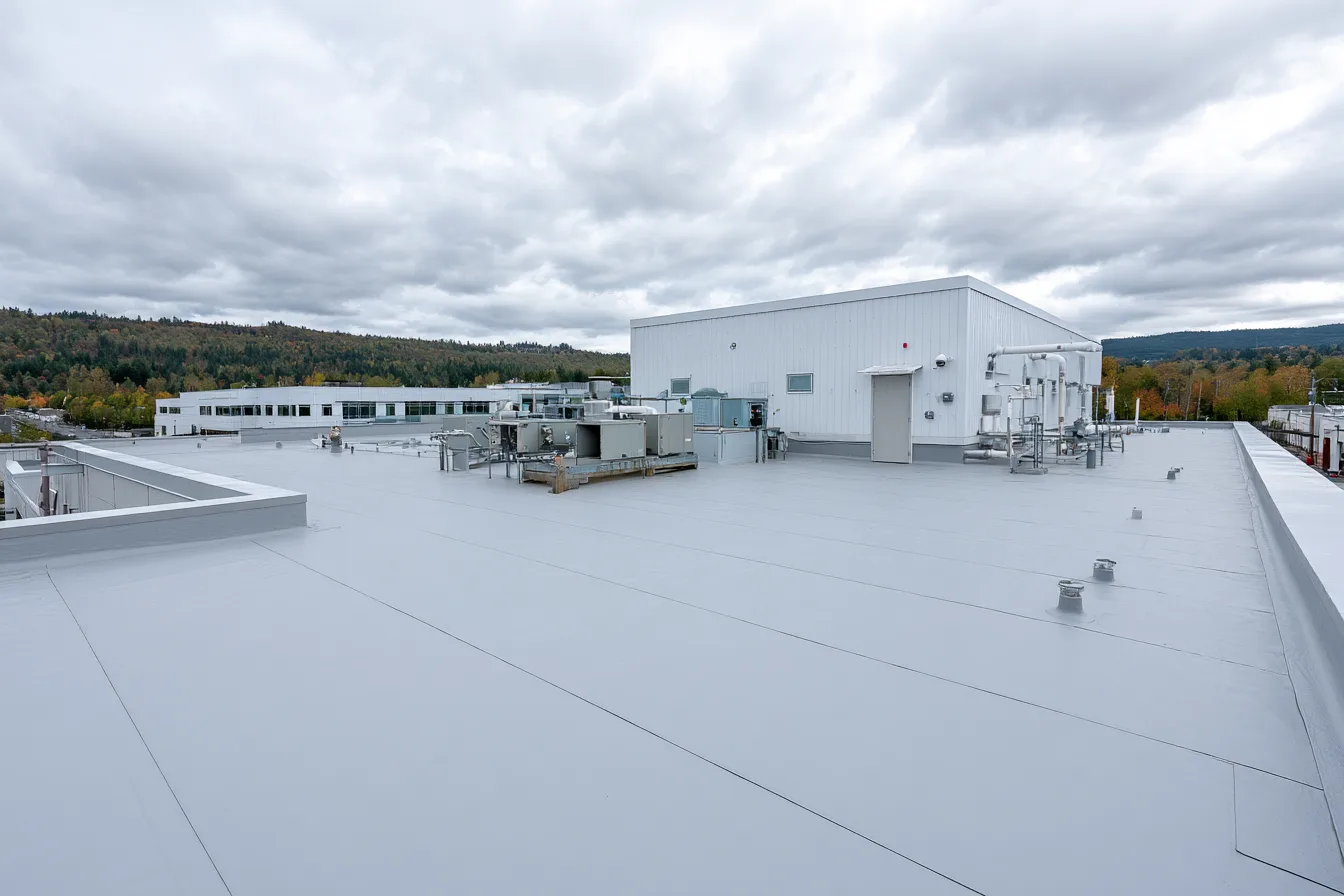
A small opening can let water travel through a much larger assembly. Find the source, establish the affected layers and plan repair around the building in use.
The leak above a suspended ceiling may start at a seam, an equipment curb or a drain some distance away. Water can move along the deck or between roof layers before it becomes visible. Repairing the surface nearest the stain can miss that path.
A commercial flat-roof repair needs to identify the membrane and the condition around the defect. Different materials use different repair methods. TPO, EPDM and asphaltic roofing should not all receive the same patch because their bonding and compatibility requirements differ.
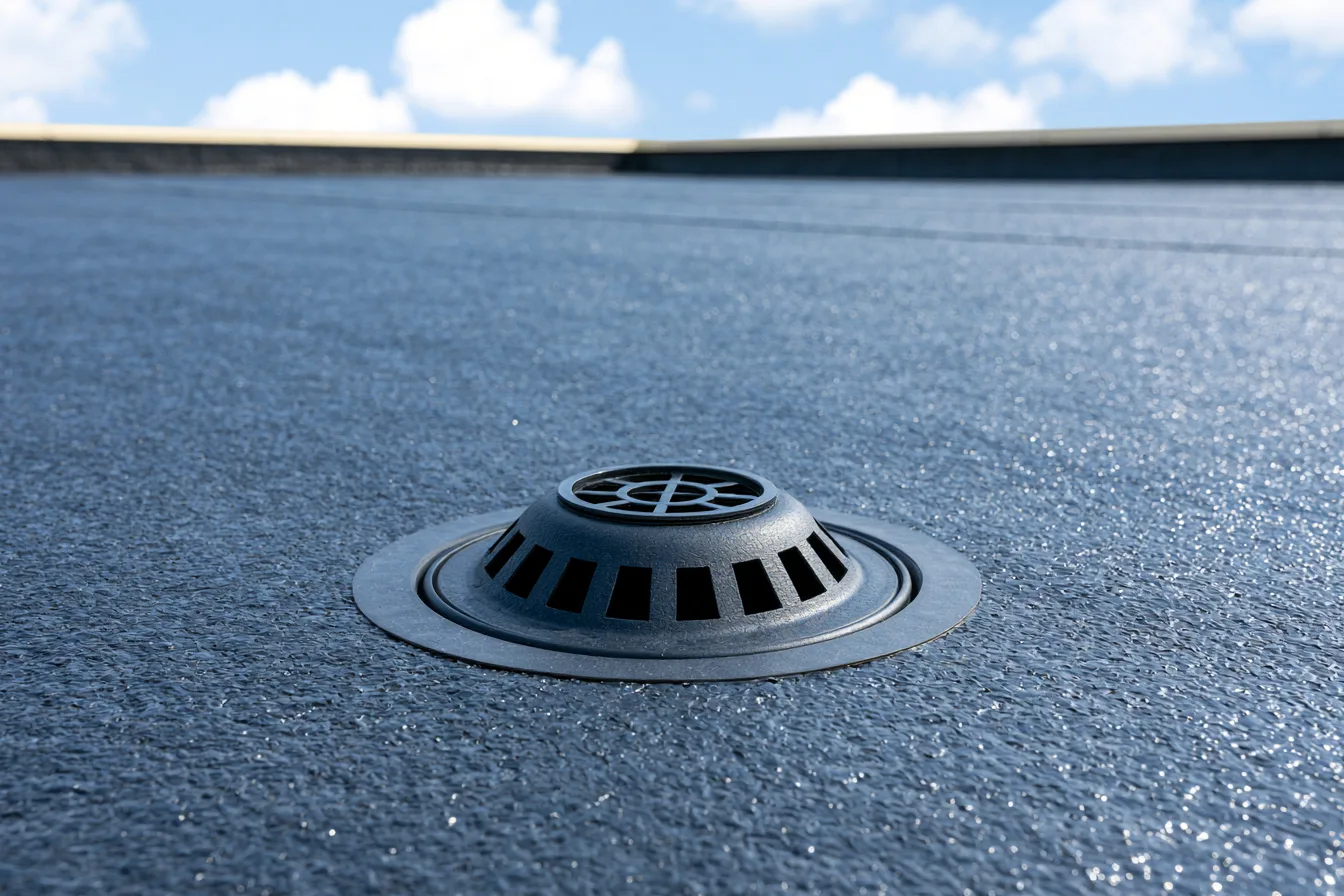
The inspection should connect the building symptom to the roof detail that allows water entry.
An open lap, puncture or split must connect to a sound, prepared surface. Dirt, incompatible old repair products and degraded material can prevent that connection.
HVAC units, pipes and supports interrupt the membrane. Flashing must turn up and terminate correctly, with compatible detail work at corners and transitions.
A blocked outlet or failed drain connection can leave water behind. A repair may need drainage work as well as membrane work; a patch cannot create missing slope.
A repair can look watertight on top while wet insulation remains below. When moisture is trapped in the assembly, the scope needs to establish its extent and replace unsuitable material rather than seal it beneath another layer.
The same applies to a weak deck or repeated movement at a joint. The visible opening is the symptom; the failed support or connection is part of the repair. Roof access and any investigative opening need to be planned for the conditions.
That investigation also explains the difference between a surface repair and a larger bill. A dry, isolated puncture can stay a membrane job. Wet insulation requires opening and rebuilding an area of the assembly, with temporary weather protection while that work is exposed. The repair boundary follows serviceable material, even when the stain below is small.
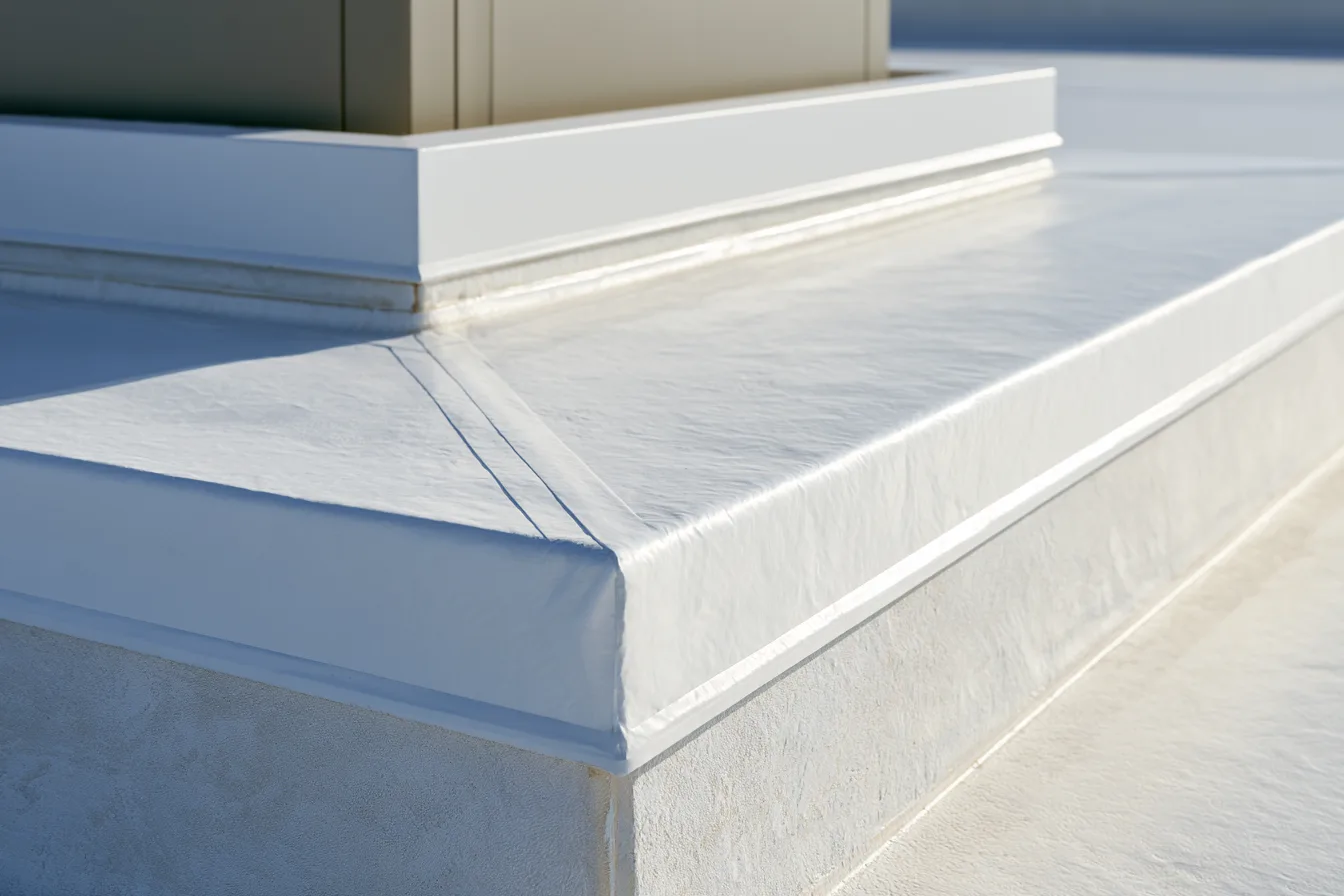
Existing warranty terms can govern who performs work, what materials are used and how the issuer is notified. A repair should fit the actual roof system and its applicable terms. An unrelated patch product can make future repair and coverage questions harder.
If renewal is the stronger option, TPO roofing explains the attachment and insulation decisions behind a new membrane assembly. The choice starts with the roof, not with a preferred patch.
Tell us where water appears inside, whether it is active and how the affected space is used. Keep people and equipment clear of unsafe areas.