Shingles and fastening
Damaged shingles are released and replaced so their courses, fasteners and seals connect correctly. If neighboring shingles break when lifted, the workable repair area has to grow.
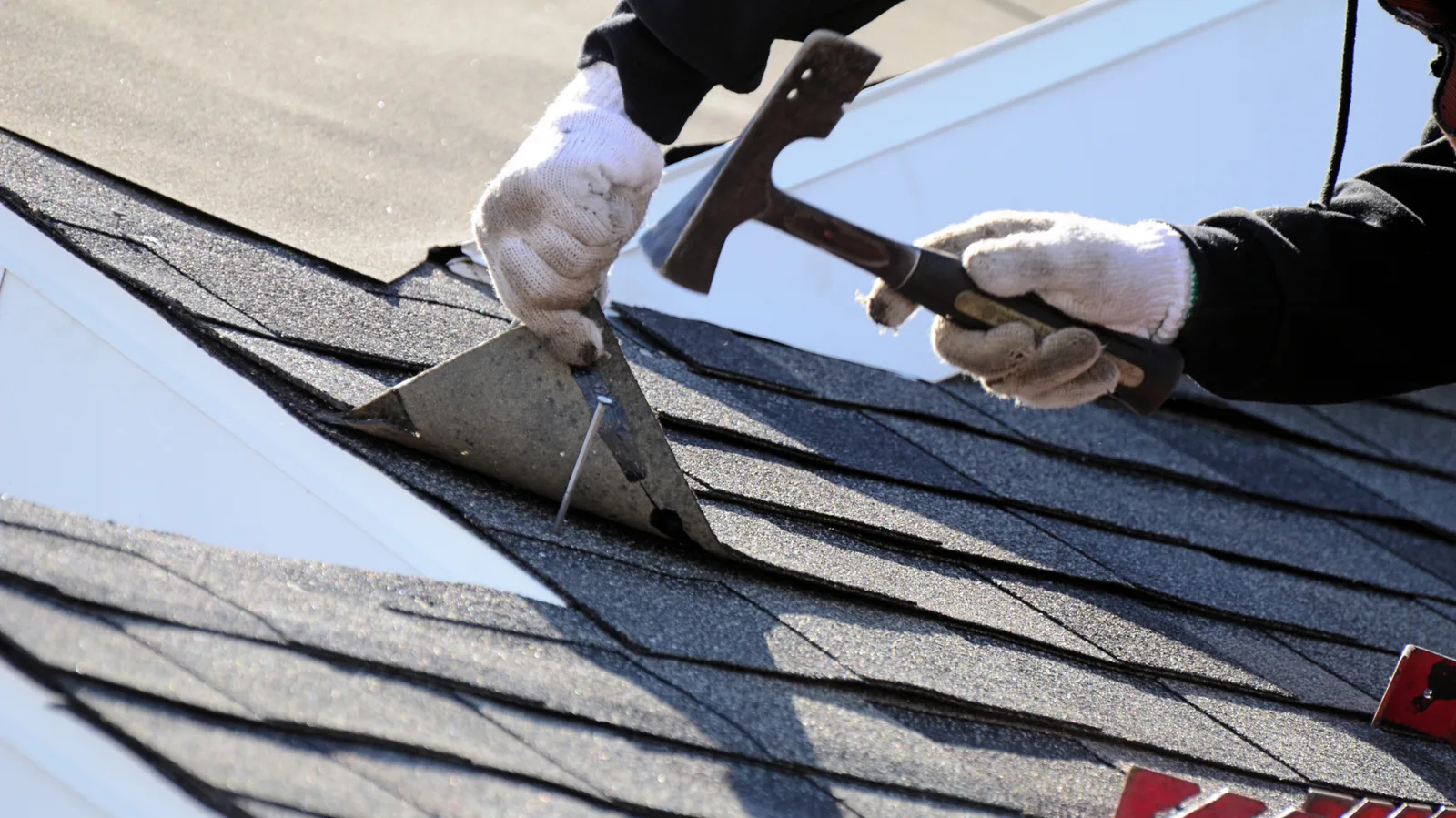
A repair should stop the entry point and leave the surrounding roof able to do its job. Start with a free inspection to find out what needs work.
A brown ceiling ring can make a small roof opening feel like a whole-roof problem. Sometimes the work is a failed pipe boot, a short run of flashing or a damaged group of shingles. The size of the stain alone doesn't tell you which.
Roof repair in Lee's Summit starts by tracing where water enters. Rain can travel beneath shingles or along framing before it reaches the room. Repairing directly above the stain without finding that route leaves the real opening in place.
A free roof inspection gives a roofer a closer look at the surface and its details. The aim is to connect the repair to sound roofing, then identify any wet or weakened material that also needs attention.

Some conditions need attention before a routine repair discussion. Stay off the roof and keep people out of the affected area.
A durable repair restores the way the materials overlap and shed water. Smearing sealant over an opening can hide the condition without rebuilding that path.
Damaged shingles are released and replaced so their courses, fasteners and seals connect correctly. If neighboring shingles break when lifted, the workable repair area has to grow.
Metal flashing carries water around walls and chimneys. A pipe boot seals the opening around a plumbing vent. A split collar or a loose transition needs a repair that restores that connection, not just a coating over the visible crack.
Soft or deteriorated decking cannot hold the new work properly. Once the opening is exposed, unsound material needs replacement and the underlayment needs to reconnect to the water-shedding layers.
The useful boundary is the condition around the failure. A roof does not become a replacement project simply because it has one leak.
Replacing a pipe boot is a different job from rebuilding wet decking below it. Roof height and pitch affect access and fall protection; walls, chimneys and valleys add detail work. A small visible opening can therefore involve more labor than a larger patch on an open, accessible slope.
Interior drywall, insulation or electrical damage can also remain after the roof opening is fixed. Those repairs have their own scope and trade requirements. A roof repair should not be described as complete interior restoration.
Our roof-cost guide separates these causes so the budget discussion is about the work on your roof, rather than a price attached to a stain.
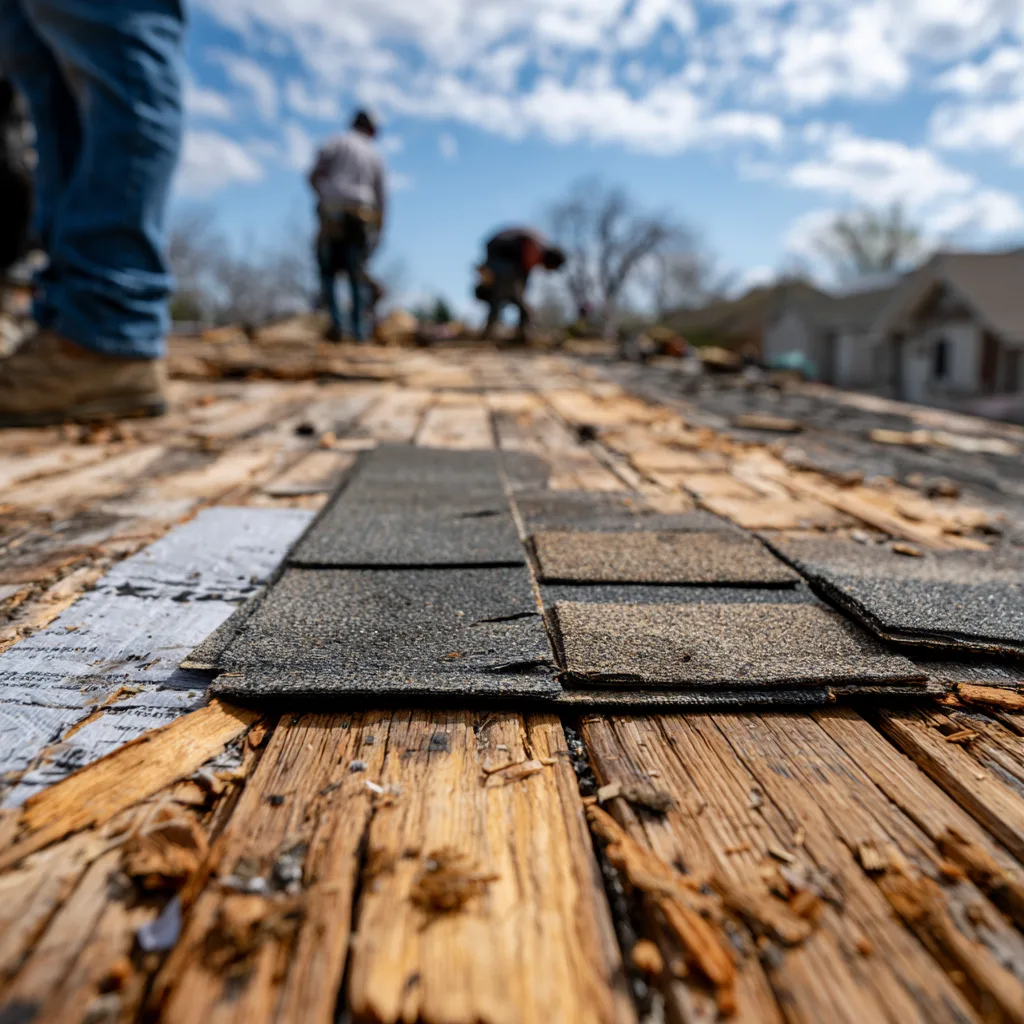
Yes, when the failure is local and the surrounding materials can support the new work. A failed vent boot or short flashing section does not automatically require a new roof. Broad deterioration changes that answer because the repair has to tie into something sound.
A replacement shingle can be close in style and color without looking identical. Weathering changes the existing roof, and some older products are discontinued. The visible difference belongs in the repair discussion before the work starts.
A claim is a separate decision from fixing the roof. Ordinary wear is different from a covered storm loss, and the deductible and policy terms affect payment. The roof insurance guide explains those distinctions without assuming coverage.

Tell us which room or roof edge brought the problem to your attention. A free inspection helps establish the repair question without making you diagnose the roof.